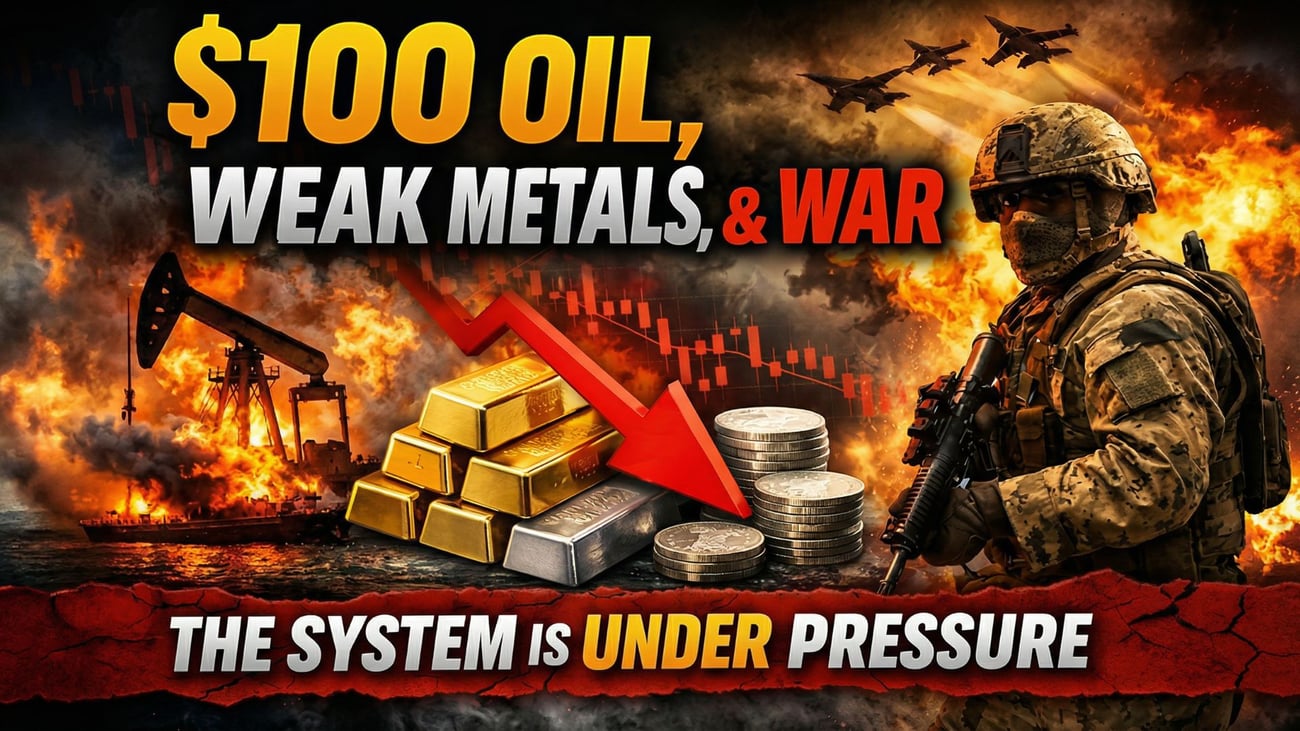
David Morgan’s weekly perspective focuses on a market environment being driven by war, energy stress, and early signs of systemic pressure.
Oil is the dominant story. Crude prices have pushed above $100 per barrel amid escalating tensions involving Iran and the Strait of Hormuz, a critical chokepoint for roughly 20% of global oil supply. Governments are attempting to stabilize the situation through
measures like releasing strategic reserves and easing sanctions, but prices remain elevated. With warnings that oil could reach $180 if the conflict continues, the broader takeaway is that the global supply system is strained and policymakers are running out of effective tools.
Despite rising geopolitical risk, gold and silver moved sharply lower and remained volatile throughout the week. This is largely due to a strong dollar and rising interest rates, which are currently outweighing the
traditional safe-haven demand for metals. Morgan emphasizes that this is typical in the early stages of a crisis, where liquidity and capital flows favor the dollar before eventually shifting back toward hard assets. He views the current weakness in metals as a temporary consolidation phase rather than a breakdown in the long-term trend.
The conflict itself continues to escalate with no clear resolution, putting pressure on global supply chains and increasing risk premiums across markets.
Oil spikes, weakening equities, and rising volatility are all signals of growing instability. At the same time, public sentiment is beginning to shift as rising fuel costs feed into broader inflation concerns, creating economic and political pressure.
Morgan’s conclusion is that this is not a normal market cycle. Oil reflects supply stress, precious metals signal financial strain, and consumer sentiment is starting to react to rising costs. He believes the system is under increasing
pressure and that markets are still in the early stages of a longer, more complex cycle.
|